
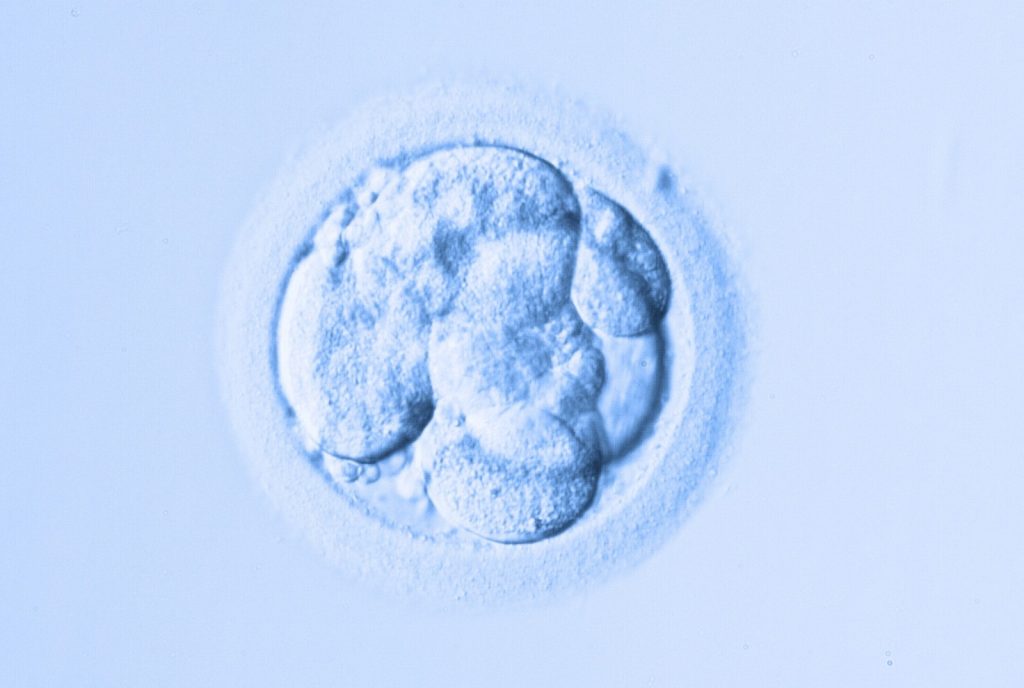
Why Embryo Loss Can Feel Like a Profound Grief
By Saff Mitten
One of the least understood aspects of IVF is the depth of attachment that can develop towards your embryos.
After months or often years of infertility, there is finally something real, tangible and full of possibility.
To those outside the world of fertility treatment, embryos are often viewed in medical terms: a stage in development, a collection of cells, or simply another part of the IVF process. But for many people going through IVF, they come to represent something fundamentally different.
When you are faced with infertility and the need to do IVF, becoming a parent can feel like a dream or a goal you are working towards that is constantly out of reach. The IVF process can be really difficult, yet at the same time may feel like your greatest chance at becoming a parent. Once your embryos have been created (if you are lucky enough to reach this point), many people suddenly experience the future they have been working towards as something tangible. As a result, an attachment to these embryos may naturally begin to develop.
The attachment is not simply because embryos represent hope, although they do; it is because they feel profoundly real. They are no longer just an idea or future possibility, but can feel like the beginnings of your family.
Whether embryos are created using your own eggs and sperm, donor eggs, donor sperm or donor embryos, the attachment that develops is often remarkably similar. Their existence can feel like the earliest beginnings of the family you have dreamed of for so long.
It is something that often only people who have been through IVF truly understand.
Getting to the stage of embryo development feels incredibly meaningful. People know how many embryos they have. They celebrate when one reaches blastocyst, feel devastated when another stops developing, and remember exactly how many remain frozen. They are shown photographs of their embryos and learn their grades. What begins as something microscopic quickly becomes something deeply personal.
Alongside this often comes attachment, protectiveness and, for some, even love. The relationship with your embryos often develops naturally because, for the first time, there is something tangible that already feels deeply personal.
Parenthood, which once felt so distant, can suddenly feel within reach. For some, it can even feel as though, in a small but significant way, the emotional journey into parenthood has already begun.
This helps explain why the loss of those embryos can feel so devastating.
Whether your embryos stop developing in the lab, fail to survive thawing, or a transferred embryo does not implant, the grief can be immense. Although these experiences are medically different from pregnancy loss, they can share many of the same psychological features. There can be shock, disbelief, overwhelming sadness, confusion, and grief for a future that had started to feel within reach.
In the aftermath of that loss, many people find themselves wondering about the embryo they have lost. Would it have been a boy or a girl? What would they have been like? These thoughts are not unusual. They are part of grieving a future that felt like it was already beginning.
To people who haven't experienced IVF, these thoughts may be difficult to understand and empathise with. However, to many people who have lived through it, they feel entirely natural. An attachment had formed to the embryo, and it is a genuine loss.
Alongside the grief often comes an overwhelming search for answers. When embryos stop developing, fail to survive thawing or don't implant, the clinic cannot always explain why.
For many women, living with that uncertainty can feel almost impossible. Our minds naturally seek explanations when something painful happens, particularly when so much has been invested emotionally, physically and financially. In the absence of clear answers, many women begin searching for their own.
Was it something I did? Did I go back to work too soon? Should I have rested more? Is there something wrong with my body?
Even when they understand intellectually that embryo development and implantation are extraordinarily complex biological processes, emotionally it can feel impossible not to turn those questions inwards. In the absence of certainty, self-blame often becomes a way of trying to make sense of something that feels otherwise impossible to understand.
Women often describe feeling that their body has somehow failed them. But it can go even deeper than that.
"I feel like my body failed my embryo."
There can be a painful sense that the very place that was supposed to nurture and protect it somehow let it down. Rather than experiencing the loss as something outside their control, many women internalise it. The grief becomes intertwined with guilt, shame and a deep loss of trust in their own body.
Alongside this, perhaps one of the loneliest and most difficult aspects of embryo loss is feeling that others don't understand the depth of what has been lost.
People outside the world of IVF tend to understand there is disappointment when a cycle fails. However, they don't necessarily realise that, for many people, it is more than disappointment. It is also grief and loss.
If you had become attached to your embryos and had already considered them the beginnings of the family you longed for, it is understandable that losing them would bring grief. You do not need other people to understand that grief for it to be real. It does not need to be justified or compared with anyone else's. It deserves to be acknowledged. It deserves compassion. And perhaps, most importantly, it deserves permission to be mourned.
If this article resonated with you…
I'm Saff Mitten, a specialist counsellor and psychotherapist supporting women through IVF, infertility and miscarriage.
My approach is shaped by my professional training and experience, together with the personal understanding I bring from my own journey through IVF, infertility and miscarriage.
Through both my therapeutic work and my writing, I explore the emotional and psychological impact of these experiences to help women make sense of feelings that can often be difficult to put into words and feel less alone.
If you're looking for support with infertility, IVF or miscarriage, you can follow the link below to learn more about how I support women through these experiences. I work online and support women across the UK.